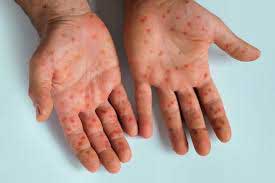
















Health emergency declared as whooping cough and yellow fever cases rise; Vaccination program begins
The government has declared a health emergency as a result of rising numbers of whooping cough and yellow fever cases. In response to the threats, the Ministry of Public Health will begin a national vaccination program May 5, with a focus on the 10 most affected provinces.
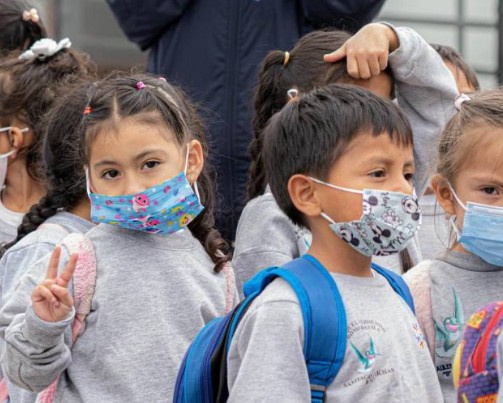
Beginning Monday, face masks will be mandatory for students in four provinces.
Other measures included in the decree are heightened epidemiological surveillance, isolation of whooping cough patients and a face mask mandate for students in four provinces.
The ministry has confirmed 325 cases of whooping cough, or pertussis, a highly contagious disease that primarily affects young children. Most of the cases have been recorded in four provinces, Guayas with 106, Manabí with 52, Pichincha with 45 and Santo Domingo with 30.
The whooping cough vaccination program prioritizes children, with ministry brigades planning to visit all schools in the country. In addition, the government is launching an information campaign aimed at mothers of infants, since the disease is most dangerous for children under two years old.
Adults with compromised respiratory systems are also at risk for contracting the disease.
The Ministry of Education has mandated protective face masks for all public and private school students in Guayas, Manabí, Pichincha and Santo Domingo Provinces.
Whooping cough is transmitted person-to-person.
Although the ministry is urging vaccination against yellow fever for all residents under the age of 60, it is prioritizing those in Zamora Chinchipe, Morona Santiago, Pastaza, Napo, Orellana, and Sucumbíos Provinces. Although only four cases and two deaths have been reported, doctors say larger outbreaks in neighboring Colombia and Peru are putting Ecuador’s Amazon region at high risk.
“What alarms us about these [yellow fever] cases, is that we have had none for eight years, and only three or four have been reported in Peru and Colombia,” says Health Minister Edgar Lama. “We need to get people vaccinated against this.”
In addition to the Amazon, the ministry is “maintaining a close watch” in coastal and littoral regions of the country. Yellow fever is spread by mosquitoes in low-lying areas but can be a threat in any tropical location in elevations up to 1,500 meters (5,000 feet). The disease is not transmitted person-to-person.
On Friday, the Health Ministry mandated that travelers under the age of 60 returning to Ecuador from Colombia, Peru, Bolivia and Brazil show proof of a yellow fever vaccination.