













Illegal money fuels Ecuador’s economic growth, making up more than 10% of the country’s GDP
In two recent reports, the World Economic Forum and the World Bank estimate that illegal money amounts to 10% to 11% of Ecuador’s economy. Of the total, according to the forum, 7% to 8% are profits from illegal drug sales with the rest contributed by illegal mining and other activities.
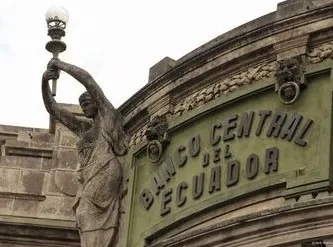
Ecuador’s banking industry is enjoying big profits from illegal drug and mining investments.
In its report, the forum estimates that drug money amounted to more than $10 billion of the $131 billion of Ecuador’s 2025 GDP. It estimates that another $4 billion was contributed to the economy by illegal mining profits.
The report also indicates that about 70% of the illegal money passes through Ecuador’s banks and financial cooperatives. The cash infusion, the forum says, has produced record profits for private banks as net income has increased 65% since 2021, from $57.2 billion to $94.3 billion in 2025.
According to Joaquin Quezada of Florida International University, who advised the forum in its study, the government and banking industry are reluctant to discuss the benefit that drug and mining money bring to the economy. “They are happy to report that the economy is expected to grow 4.1% in 2026 but they are less eager to acknowledge that much of that growth comes from ill-gotten gains,” he says.
What is happening in Ecuador, Quezada says, mirrors the economic impact in other countries where illegal profits are a large part of the economy. “This has for years been observed in Mexico and Colombia and it must be acknowledged that the bad money is good for the economy,” he says.
The “dirty little secret” of illegal money presents a dilemma for governments who are publicly extolling their success fighting drug lords and illegal miners, says Quezada. “They would much rather brag about the arrests of gang leaders, the seizure of tons of cocaine and the construction of new prisons than to talk about the money.”
Besides benefitting the banking sector, the real estate industry is also seeing big gains, Quezada says. “The benefits here are focused in areas of the country seen as safe havens by national and international money launderers while most of the country sees no benefit at all. The money changers do not want to invest in the high-crime cities where they do their dirty work and that’s why you see the building boom in places like Cuenca and the suburban valleys east of Quito.”