

















Living in ‘garbage time’: When 500 million Chinese change their spending habits, the world feels it
By Christian Yao and Te Herenga Waka
China’s economic rocket ride appears to be ending – or slowing, at least. Growth has declined from 8.4% in 2021 to 4.5% today, youth unemployment has climbed to 16.9%, and cities are filled with unfinished buildings after the collapse of property developer Evergrande in 2024.
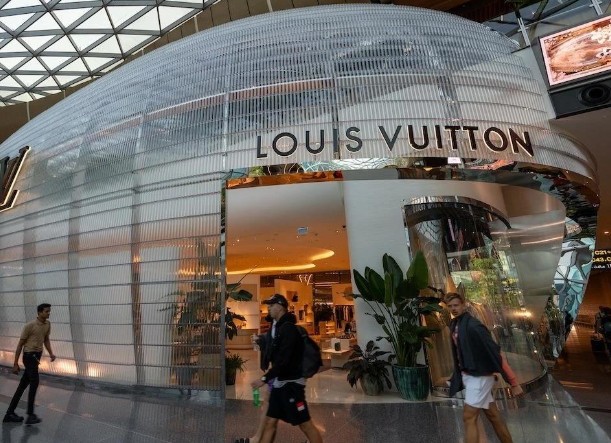
Middle-class Chinese are increasingly turning away from luxury brands.
For a while now, a phrase has been buzzing on Chinese social media sites Weibo and RedNote to describe what’s happening: “garbage time”.
Borrowed from basketball slang, it refers to the final minutes of a game whose outcome is already decided. The best players sit out. The bench players take over. No one tries as hard because there’s less at stake.
The term caught on last year and seems to capture a mixture of sadness and dark humour. Basically, people now seem to expect less. It’s not so much an economic crash as a slow decline of hope.
For those born in the 1980s and 1990s, who grew up during China’s four decades of fast growth, this is a major shift. Wages aren’t climbing, houses are losing value and jobs in tech and finance are harder to find.
But “garbage time” is also making room for younger and middle-class Chinese to redefine success and contentment. With good jobs, luxury goods and home ownership now harder to attain, a generation is questioning what matters most in a changing socioeconomic landscape.
From Prada to ‘living light’
Only ten years ago, many in China’s middle classes were chasing big dreams: they bought homes and designer brands, and sent their children overseas for schooling. “Getting rich is glorious,” former leader Deng Xiaoping once said.
Many Chinese fully embraced this idea. According to a 2021 study of millennial consumption habits, 7.6 million young Chinese spent an average of 71,000 yuan (US$ 10,375) on luxury goods in 2016, approximately 30% of the global luxury market.
Now they appear to be changing course, putting that kind of spending on hold because of financial anxiety.
Take the rising phenomenon of “tang ping”, for instance, which is seeing more young people embrace “living light” and rejecting hustle culture. Or the notion of “run xue” or “run philosophy” – literally the study of how to leave China.
Young Chinese are marrying later, too, with rising wedding costs and changing attitudes to traditional family values seen as the main reasons.
Shopping habits appear to confirm the trends. Xianyu, China’s biggest online used-goods seller, reached 181 million users in 2024. Sales topped one trillion yuan, ten times the 2018 level. Chinese car maker BYD now outsells prestige foreign brands.
This is about more than just saving money. Traditionally, Chinese culture has valued career success and family status, but job scarcity and falling house prices are challenging old assumptions.
Young Chinese are now questioning the value of hard work in a system that may no longer reward it. They increasingly value personal wellbeing over chasing status. If the trend continues, it could see a new sense of middle-class identity emerge.
________________
Credit: The Conversation



Hogar Esperanza News

Fabianos Pizzeria News

The Cuenca Dispatch

Week of September 20

Ecuador turns to industrial power cuts to protect Mazar and keep homes from going dark.

Ecuador raises its 2026 growth forecast, but El Niño could spoil the outlook next year.

Cuenca retirees challenge medical and therapy changes at IESS senior center.
Fund Grace News