













National electricity company officials warned the Energy Ministry of a power crisis in early March
The management of the National Electricity Operator (CENACE) warned the Energy Ministry of the “urgent need” to make repairs to electric transmission lines and substations weeks before recent service suspensions began in Guayaquil and Quito.
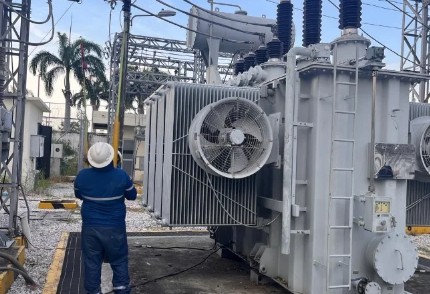
A technician works at an electrical substation in Guayaquil.
In a March 6 memo, CENACE provided a list of repairs and upgrades it said were essential. “If these works are not carried out, there is a high probability of overloads and service cuts in some parts of the country,” it said. “At this point we are very close to losing control of the system. We urgently need a significant investment in new equipment to maintain full service and to increase capacity.”
In addition, the memo said that the power grid would need to purchase the maximum of 400 megawatts from Colombian generation companies.
Following the warning memo, CENACE managers noted in internal emails that there had been no response from the ministry.
The officials who wrote the memo were fired last week by Energy Minister Inés Manzano.
Since early April, electric blackouts have occurred in Guayaquil, Quito and at least five over areas of the country. In Guayaquil, some customers reported suspensions of as long as 12 hours on Monday and Tuesday.
The Energy Ministry conducted repair work on two electrical substations near Guayaquil on April 11 and 12 but suspended work April 13. A ministry spokeswoman said the repairs were being delayed due to the heat wave on the coast. “With the high temperatures, people need their air conditioning, so we made the decision to delay the repairs,” she said.
Manzano has said repeatedly that there is no danger of a return to the nationwide blackouts that occurred in 2024. “We are simply making upgrades to our equipment and this work is routine,” she said Tuesday.
Energy analyst and consultant Darío Dávalos, who saw the CENACE memo for the first time Wednesday, said that the country is “paying the price” for ignoring its advice. “If it had been followed, we would not have the power cuts we are currently experiencing,” he said. “We needed to plan for the increased power demand on the coast during the hot season. It happens every year, and we needed to realize that the households that had one air conditioner a few years ago, now have four of five.”
Dávalos added that the political conflict with Colombia, which has led to the suspension of electric transfers from that country, has “greatly aggravated” the problem.