















Social Security system needs a total overhaul, expert says; Many Ecuadorians drink contaminated water; Ecuadorians living overseas vote in referendum
Curious? –
14.4% consumen agua con heces en el Azuay – 30.5% of Ecuadorian households consume water contaminated with fecal matter (E. coli). Although Azuay is one of the provinces with the lowest levels of contamination, the numbers are still worrisome. A forum on “The First 100 Days: Water to prevent Chronic Childhood Malnutrition” with 400 participants from academia, civil society, local governments, and international cooperation analyzed how water quality affected malnutrition levels. A national survey on Chronic Childhood Malnutrition done between 2023 and 2024, found that the percentage of households consuming contaminated water went from 36.7% during the first survey to 30.5% during the 2nd survey in 2024. The percentage of rural households went from 56.5% to 48.9%.
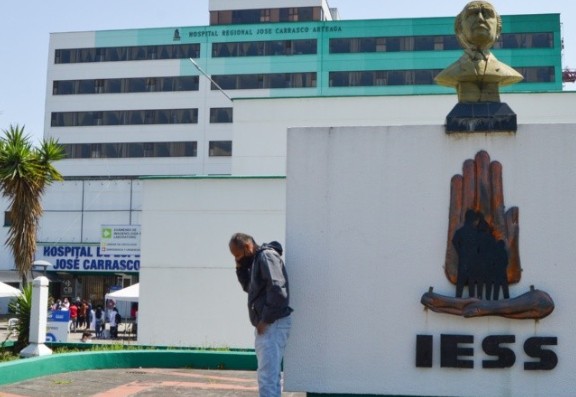
An expert on the IESS say that the system has been used for “political gains” and does not support its members.
The World Health Organization says that water for human consumption should have absolutely no fecal bacteria or E. coli. In Azuay, the percentages rose from 9.8% to 14.4% between 2023 and 2024, and in Cuenca from 3.2% to 4.2%. Juanita Versosa from the U. of Azuay, said that access to water is a human right and indispensable for childhood development. If a child consumes contaminated water, it can cause diarrhea and parasitic diseases which impedes the body’s ability to absorb nutrients, and a child can develop chronic malnutrition or delayed growth. <So are those of you who are germophobic busy buying water testing and purification kits just in case your household is part of the 4.2% receiving contaminated water?>
Combaten con artillería Minería ilegal en Azuay – <This article is for all of you senior citizens harboring inner teen-aged boys who love to see things go boom.> About 1,500 members of the Fuerzas Armadas (FF. AA. – Armed Forces) were deployed by air and land to execute tactical maneuvers against illegal mining in the La Chonta sector of Pucará in Azuay. After civilians were evacuated from the area, mining camps, processors, and mine entrances were completely destroyed by heavy artillery in a 12-hectare area. Enclaves serving as operational and logistical centers for the mining mafias were eliminated. Information from military intelligence warned that cells linked to the Los Choneros gang operated in the zone. These cells are dedicated to arms trafficking, extortion, and micro trafficking of drugs.
Habilitan 95 zonas para voto en exterior – <This is your civics lesson article about a country where voting for the referenudm questions is taken seriously.> On el 16/11, Ecuadorians living overseas can vote in person on the 4 referendum questions at 661 polling places in 40 countries. The Consejo Nacional Electoral (CNE) reported that 471,152 Ecuadorians are authorized to vote overseas, and 95 electoral zones have been activated for them. The CNE along with the Foreign Ministry guarantee that Ecuadorians overseas can access their right to vote in the same conditions of integrity and safety as in national territory. <Do you really think that US voters are all going to get the same right to security and voting without intimidation from masked and armed ICE agents at polling places?>
The constituency in Latin America, the Caribbean, and Africa has 26,132 voters, in Canada and the US there are 164,395, and in Europe, Oceania and Asia there are 280,525. <So how many of you who have lived here for more than 5 years and have opinions about the direction Ecuador should take have registered to vote and actually vote?>
“Se ha descapitalizado al IESS” – Social Security expert Henry Llanes was interviewed by El Mercurio about the Instituto Ecuatoriano de Seguridad Social (IESS). Llanes is president of the National Front for a new IESS.
Question: How would you rate the management of IESS by the Government? Answer: The same as previous governments. IESS has been used for political gains and uncompleted promises from Pres. Noboa, who offered to make retirement pensions equal to the basic salary, have accumulated.
Q: Do you think that promise must be complied with? A: That promise was irresponsible and demagogic since there were no technical, actuarial, or economic studies. It was a statement to get votes, using IESS based on political patronage.
Q: Financially, how has the management been? A: The campaign offered to capitalize the bank of IESS with a buyback of government bonds, but the opposite has happened. He decapitalized IESS. In less than 2 years, he made IESS buy $5,652 billion in Government bonds, putting its finances at risk and seriously affecting the Pension Fund.
Q. How much does IESS have in Gov’t bonds? A. With the last purchase, IESS has $14,579 billion. This created a greater loss in earnings, leaving IESS without liquidity to pay for pensions and health services. It has a lot of paper which will not be paid for 100% when it is sold.
Q: How much does the Government owe IESS? A. In 11/2024, it was $24,233 billion, in 6/2025 it reached $27,389 billion. In 7 months, it increased $3,156 billion and with that debt, the Government can break IESS.
Q: What happened to the plan to pay the debt? A: To comply with the Ley de Seguridad, which went into effect in 7/2024, there were 4 months to determine the amount of the debt and to sign a payment agreement which should not have exceeded 10 years. A payment plan was not done, nor funds assigned which means the law was not complied with.
Q: Why was the Ley de Fortalecimiento (Strengthening Act) rejected? A: Because what a spokesperson said was false. Retirees have not had better access to loans and better amounts. In practice, what was approved was the possibility that the Government benefits from IESS’s investment portfolio. The law obligates the IESS to borrow from national and foreign private banks at market interest rates.
Q: What happens if member care passes to the Ministry of Health? A: Financially, 2 aspects must be considered. What happens with the debt that the Government owes the Health Fund of IESS which was $17,578 billion in 11/2024. And what happens with the assets of IESS, the hospitals and dispensaries. To pass them to the Ministry of Health is an appropriation of resources that do not belong to the Government. It’s an abusive and arbitrary confiscation, damaging to the members.
Q: Does the Ministry of Health have the capacity to treat IESS patients? A: A system in which doctors had to take up a collection to feed patients, such as occurred in a Quito hospital, can’t possibly treat more people. The care at the Ministry of Health hospitals is deficient, and in these conditions, it is irresponsible to take charge of IESS beneficiaries. <Sounds like all of you who get medical care through IESS might be in for a rough ride if you get transferred wholesale into the public hospital system. But it’s supposed to be free, right? Just pray you get more than you pay for.>
________________
Information in this column, including dates, times and locations, is courtesy of the El Mercurio newspaper. Comments between the carrots, or guillemets (< … >), are the personal opinions of the author and not part of the news translation.



Hogar Esperanza News

Fabianos Pizzeria News

The Cuenca Dispatch

Week of September 20
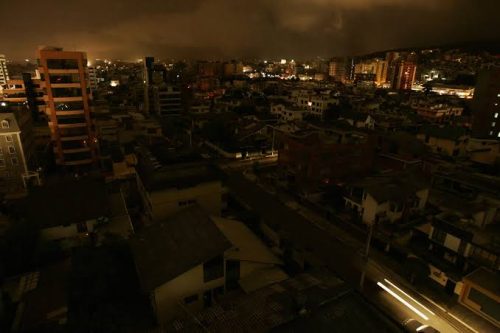
Ecuador turns to industrial power cuts to protect Mazar and keep homes from going dark.
Ecuador raises its 2026 growth forecast, but El Niño could spoil the outlook next year.
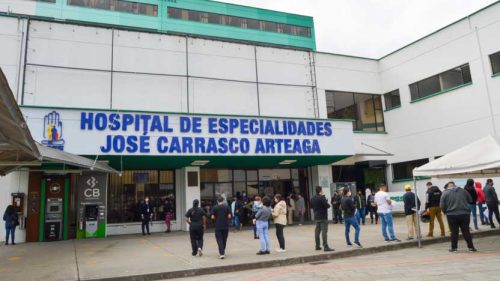
Cuenca retirees challenge medical and therapy changes at IESS senior center.
Fund Grace News