

















The liability lounge: Why American airline service isn’t actually about you
I’ve come to accept that in the United States, you’re not really being served — you’re being legally managed. That might sound cynical, but after trying to arrange a simple international flight for two girls — one thirteen, one seventeen — it’s hard to come to any other conclusion.
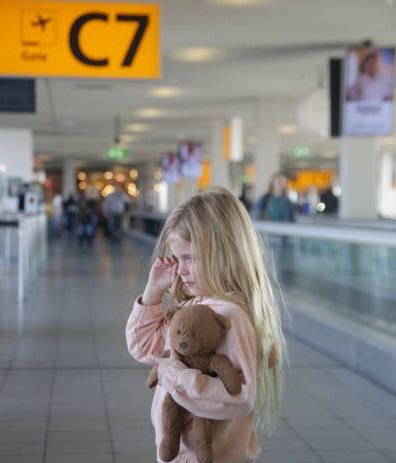
You’d think paying for a service called “Unaccompanied Minor Escort” would mean just that: someone escorts the kids through the airport, helps them with customs, and makes sure they get from A to B. And it does — sort of. But only if you pay twice. Because even though the seventeen-year-old is still a teenager herself, fully capable of looking after her little sister, the airline won’t let her “assist” unless you officially pay for her as a second unaccompanied minor. Not because they can’t — because they won’t. Because if anything goes wrong, they need the paperwork to prove she was under their care.
 In Ecuador or Panama, by contrast, you’re met off the plane by a small army of cheerful airport assistants, armed with clipboards and wheelchairs, all eager to shepherd passengers through the labyrinth.
When I flew Avianca recently, a wheelchair appeared unasked for, and an assistant escorted me through immigration, baggage claim, customs, and recheck — three times over, through multiple airports.
Nobody asked for a tip. In fact, there were printed signs taped to the wheelchairs that read “PROPINA NO PERMITIDA.” (No tipping allowed.) Though my pusher did confide that the President of Ecuador is, for reasons unclear, contemplating taking away the décimo — a mandatory 13th-month bonus payment that’s long been a staple of Ecuadorian labor law. “Just for your information,” he whispered into my ear.
In the U.S., by contrast, you’re more likely to be told, “I’m sorry, but for liability reasons…” than “How can I help?”
That phrase — for liability reasons — isn’t just a disclaimer. It’s a mission statement. It governs how airline staff behave, how companies design policies, how playgrounds are constructed, and how humans interact. American service culture isn’t built on hospitality; it’s built on the fear of being sued. Even kindness needs indemnifying.
In Latin America, the presumption is that people are basically reasonable and can figure things out. In the U.S., the presumption is that if something can be litigated, it will be. So everything must be pre-approved, documented, and protected by disclaimers. Which means a lot of helpful human impulses — like allowing an older sister to walk with her younger sibling through the airport — are smothered in caution tape.
The irony is that all this paperwork doesn’t make things safer. It just makes them less flexible, less human, and often more confusing. You feel like you’re being handed off between silos, each one disclaiming responsibility as quickly as they assumed it.
I’m not blaming the staff. I’ve met kind gate agents and thoughtful security workers. But they’ve been trained to protect the airline first, not the passenger. The system doesn’t encourage initiative. It punishes it.
Meanwhile, in Latin America, the staff actually seem to care. Maybe not in every case, but often enough that it’s noticeable. And they’re not checking if your escort form has been signed in blue ink instead of black.
So here’s my suggestion for America’s airlines: If you want to charge for unaccompanied minor service, that’s fine. But don’t pretend it’s about care. Be honest. Call it a Liability Transfer Fee. Because that’s what it is.



Hogar Esperanza News
Fabianos Pizzeria News

Fund Grace News

The Cuenca Dispatch

Week of September 20

Ecuador turns to industrial power cuts to protect Mazar and keep homes from going dark.

Ecuador raises its 2026 growth forecast, but El Niño could spoil the outlook next year.

Cuenca retirees challenge medical and therapy changes at IESS senior center.