














Traffic agency allows ‘tolerance range’ for speeding fines, tightens rules for use of speed radar devices
Ecuador drivers will no longer be fined for exceeding posted speed limits by one kilometer per hour. In revised regulations, the National Traffic Agency (ANT) has established a “tolerance range” of five kph above the speed limit as measured by fixed-position radar speed detectors and seven kph for hand-held devices.
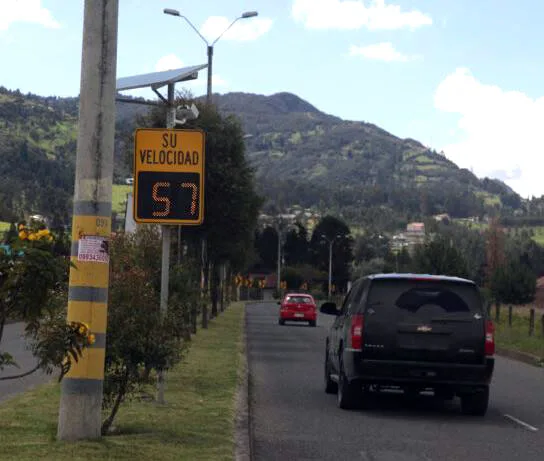
The National Traffic Agency has updated its rules for speeding fines and the use of speed radar equipment. (El Mercurio)
The new rule follows a Constitutional Court decision ending the practice of jailing drivers for speeding infractions. Although the decision addressed imprisonment of drivers who exceeded the speed limit by “excessive levels,” it suggested that the practice of fining drivers who exceed the speed limit by one kph was “likely unreasonable.” It also questioned the accuracy of speed radar equipment.
In addition to introducing a speeding “tolerance range,” the ANT prohibited the use of radar installations in smaller cities, classified as Type B municipalities, and ended the practice of private companies sharing fine proceeds with larger cities (Type A) authorized to control traffic in their jurisdictions.
The ANT added that the National Transit Commission will operate radar equipment in smaller cities.
Among other changes ordered by the ANT is that all radar equipment be routinely checked for accuracy by the Ecuador Standardization Service. “We note the fact that currently, many of the devices are not checked for accuracy on a periodic basis and this is why, when they are challenged, most speeding fines are disallowed by the courts,” the ANT said. Previously, calibration checks of radar units was recommended but not required.
The ANT and other transit organizations defend the use of speed radar readers, saying they are important for the safety of the driving public. “When they are properly calibrated and installed, radars are necessary for traffic control on streets and highways,” says Abel Gómez, president of the National Federation of Public Transport. “It is a fact that their presence slows traffic speeds and reduces speed-related accidents.”
He agreed with the new ANT rule forbidding the use of radar equipment for “profit-making purposes.”